OctopusCRM / Blog / Apollo.io Review 2026: Features, Pros & Cons, Alternative
Last updated: June 23, 2026
14
Published by: Alexander Terez
Reading time: 6minutes
Apollo.io Review 2026: Features, Pros & Cons, Alternative
If you’re looking for a platform that can help you find prospects, access contact data, and automate outreach, Apollo.io has likely appeared on your shortlist. Most of the existing Apollo.io reviews cover the software’s features.
Choosing a prospecting tool also requires examining other important factors, including data accuracy, ease of use, pricing, automation capabilities, customer support, and overall value for money.
Read our Apollo review for everything you want to know about the sales intelligence software.
Apollo.io Overview
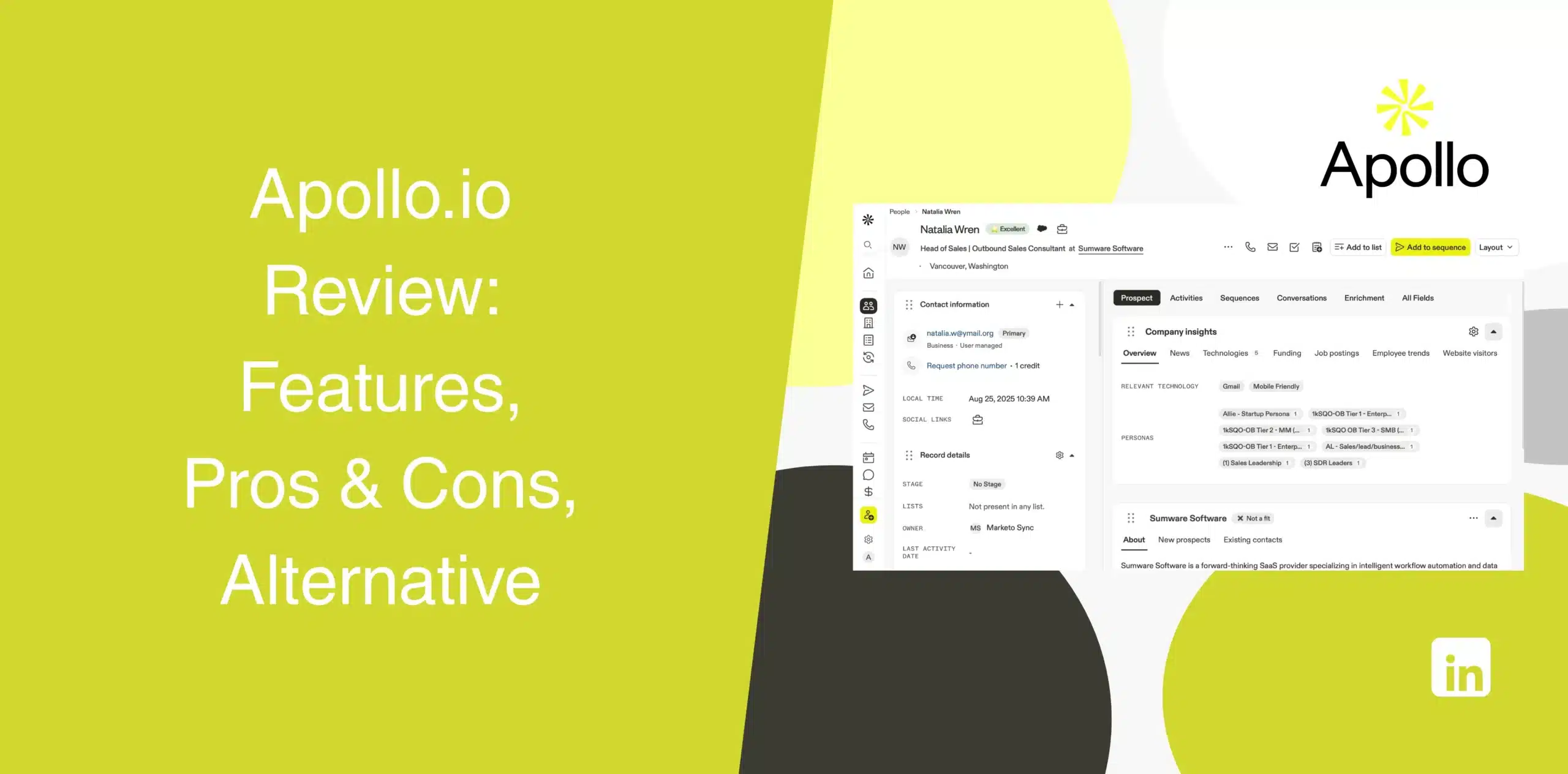
Apollo.io combines sales intelligence and engagement capabilities into one platform. B2B teams use it to find prospects, extract emails, build sequences, and track deals in one place.
Apollo has a massive contact database with outreach automation, a built-in dialer, and CRM features. The platform targets SDRs, account executives, and growth teams, from solo founders to enterprise sales organizations.
According to the company, over 600,000 companies use Apollo. That’s a lot of trust.
But not all services are created equal. Since Apollo tries to do everything, some features are half-baked. And having everything under one roof doesn’t automatically make it the right choice for every team.
Apollo Pros
You get access to a huge contact database of 210 million contacts and 30 million companies right out of the gate;
Apollo replaces your data provider, outreach platform, dialer, enrichment tool, and parts of your CRM. That means fewer tabs, fewer subscriptions, and less headache;
The Apollo Chrome extension lets you find prospect emails and phone numbers directly from LinkedIn, Gmail, Salesforce, and HubSpot;
Users can narrow down prospect lists using detailed filters such as job title, company size, industry, location, technologies used, hiring activity, and more;
AI Research, AI Lead Scoring, and AI Assistant to help you work smarter.
Apollo Cons
Many Apollo.io reviews complain about inaccurate or stale contact records;
Apollo doesn’t have robust LinkedIn automation and outreach features except for sending connection requests;
Teams relying heavily on phone outreach may consume credits quickly;
Apollo packs a lot of features, making it overwhelming for new users at first;
Several valuable capabilities, including increased limits and premium functionality, are reserved for more expensive subscription tiers.
Apollo.io Reviews
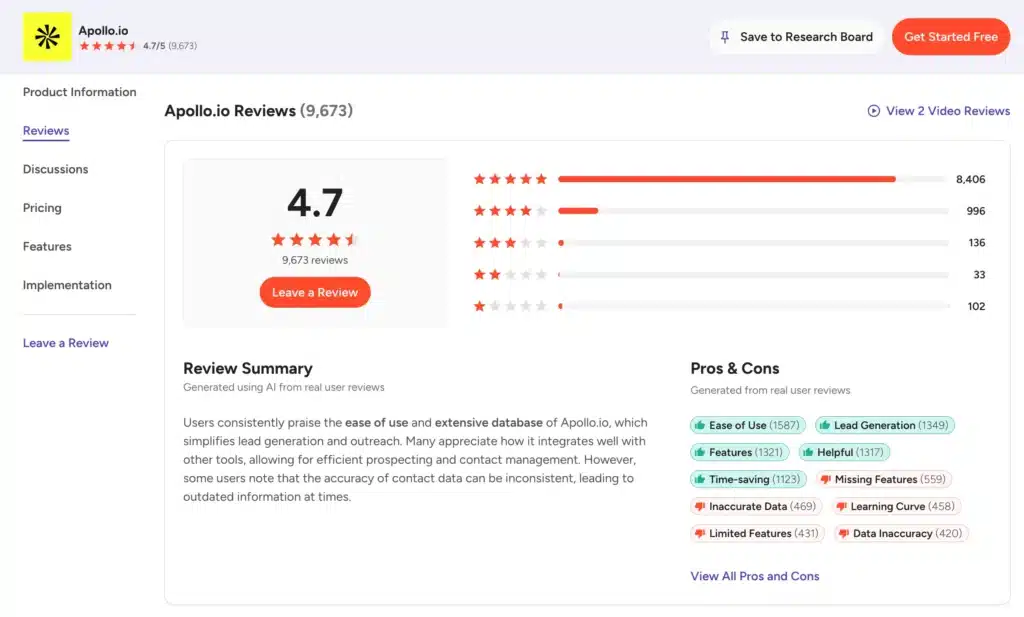
Apollo reviews on g2 show a score of 4.7 out of 5 from a whopping 9,672 users.
Most users praise the large database, filtering options, prospecting workflows, and value for money. Common complaints mention occasional data inaccuracies, credit limitations, and customer support delays.
On Capterra, Apollo.io has a rating of 4.5/5 from 393+ customers.
Many reviewers highlight ease of use, prospect discovery, and outreach automation. Negative feedback often centers around bounced emails, duplicate records, and learning curve challenges.
The opinion here is quite mixed, with some reviewers appreciating the lead generation capabilities and outreach automation features. Recurring complaints involve support experiences, account restrictions, interface issues, and data quality concerns.
Apollo.io Features
Apollo claims to be an all-in-one revenue platform. We’ll look at the major features of the software and analyze how they perform.
Sales Contact Database and Targeting Options
Apollo’s biggest strength is its massive contact database. The platform provides access to more than 275 million business contacts and company records. Users can filter prospects using dozens of criteria, including:
Job title;
Industry;
Revenue;
Company size;
Technologies used;
Hiring activity;
Geographic location;
Buyer intent signals.
However, data accuracy varies. Some contacts are stale, some emails bounce, and you’ll need to verify critical leads manually.
Also, do you really need 275 million contacts? Most sales teams only target a specific niche. The broad filters often return irrelevant results that you must clean through a hands-on approach.
Data Enrichment
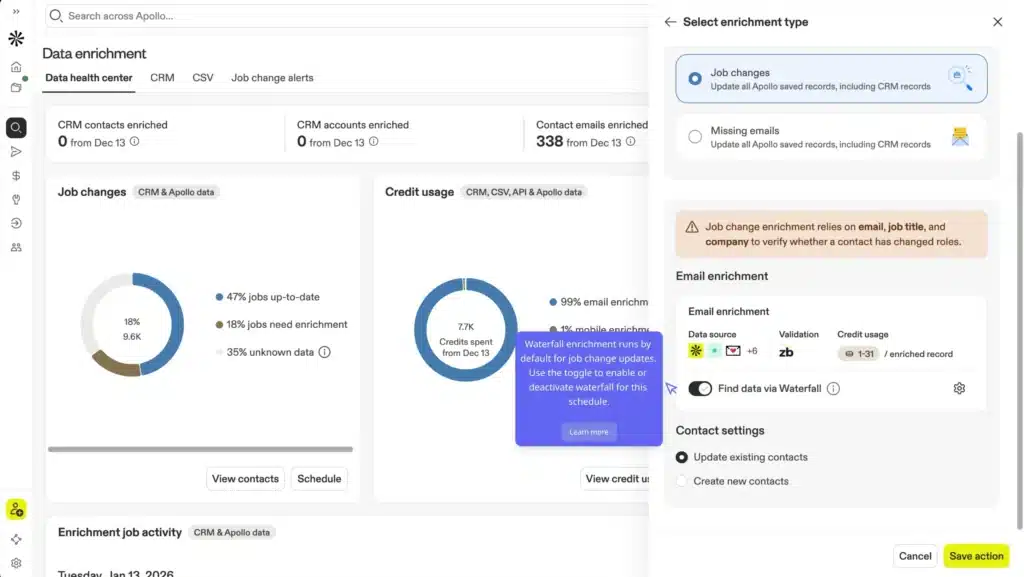
The platform updates contact information automatically, pulling data from various sources to keep emails and phone numbers up to date. You can enrich email addresses, phone numbers, company details, job titles, and social profiles.
Apollo also supports enrichment workflows that automatically update records and maintain cleaner CRM data.
That sounds useful, right?
But you still need to verify emails before sending. If you skip this step, your sender reputation will tank. The enrichment feature does not guarantee a 100 percent deliverability rate.
Plus, enrichment consumes credits, which run out fast. You’ll need to budget carefully if you’re enriching large contact lists.
Omnichannel Outreach Workflows
You can build sequences that include emails, calls, and LinkedIn connection requests.
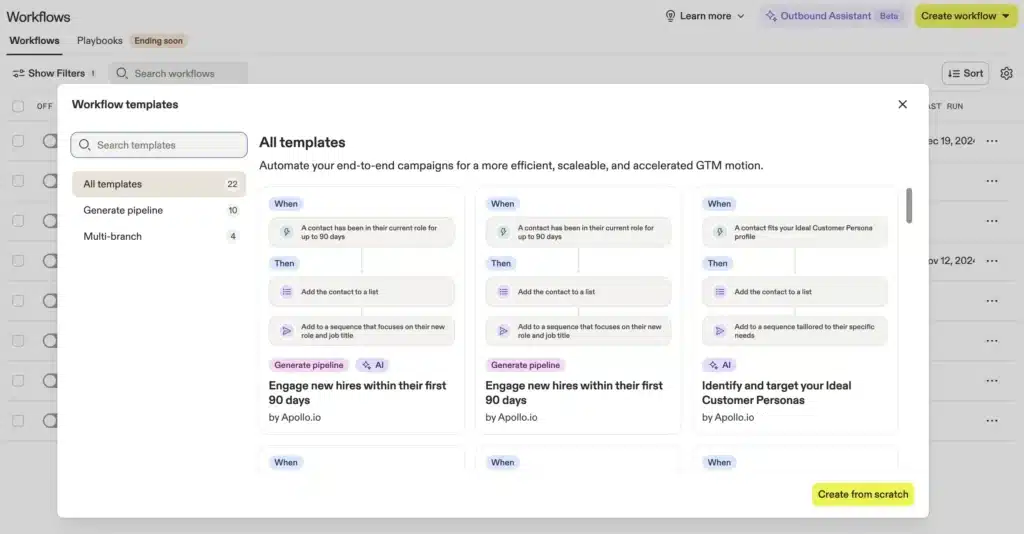
The system triggers the next step based on user actions. If a prospect opens your email, the system waits. If they ignore it, it sends a follow-up. This keeps your follow-ups organized, but building these workflows takes time.
Sales teams can also track open rates, replies, meetings booked, and sequence performance.
AI Features
Apollo continues expanding its AI functionality.
Current AI capabilities include:
Email generation;
Message personalization;
Prospect research;
Lead recommendations;
Workflow assistance;
These features reduce manual work, helping reps move faster through prospecting and outreach tasks.
Native Phone Dialer and Call Intelligence
The built-in dialer logs your calls automatically. It records conversations and provides transcripts. Plus, you can track call outcomes directly in the CRM.
While this feature helps managers coach their reps, the call quality depends entirely on your internet connection, and the dialer sometimes lags.
Integrations
Apollo connects with Salesforce, HubSpot, and Slack, allowing you to sync your data across these platforms. Setting up these integrations requires admin privileges and some technical knowledge.
Apollo MCP
Built on Model Context Protocol (MCP), Apollo MCP connects Apollo directly with AI tools such as ChatGPT, Claude, and Perplexity. Users can search prospects, enrich records, add contacts to sequences, and manage outbound workflows directly from AI conversations.
But since this is a new feature, its practical use cases are still limited for most small teams.
Chrome Extension
The Chrome Extension adds Apollo features to LinkedIn and Gmail. You can reveal emails and add prospects to sequences while browsing. It works well for quick tasks but consumes a lot of browser memory and slows down your computer.
Apollo.io Price & Subscription Plans
Check the Apollo.io pricing table below.
Plan
Monthly Price (Billed Monthly)
Credits
Free
$0
75
Basic
$59
2500
Professional
$99
4000
Organization
$149
6000
Apollo’s pricing is complex. Credits are used for exports, enrichment, and dialing. You’ll burn through them faster than you expect.
Best Alternative to Apollo.io
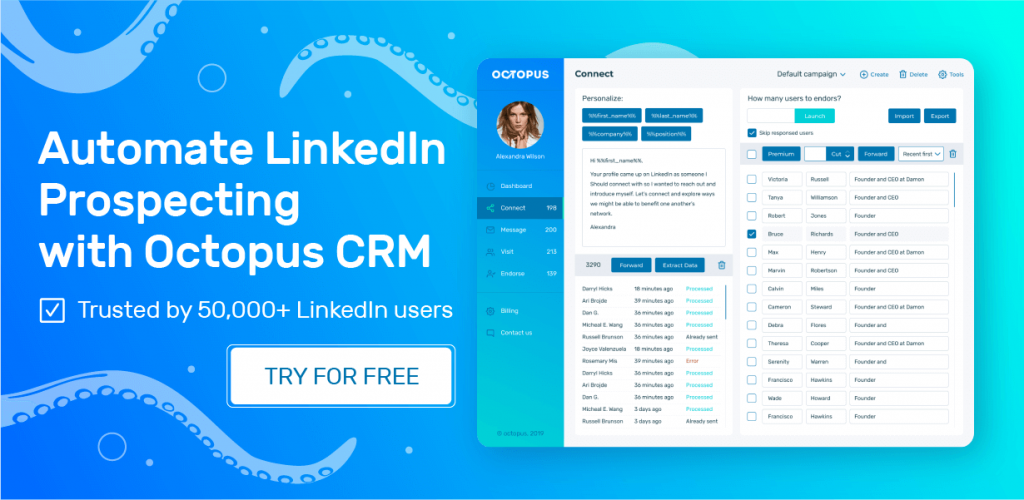
If you’re looking for a LinkedIn outreach or automation tool, Octopus CRM is the best Apollo.io alternative. Apollo is a contact data and sales intelligence platform, whereas Octopus CRM LinkedIn automation tool is specialized specifically on LinkedIn action automation.
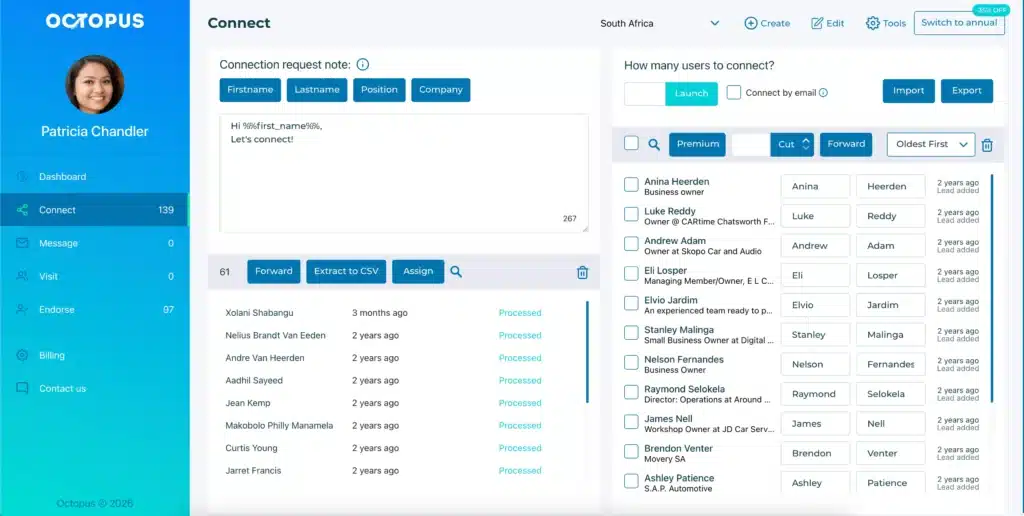
You can use Octopus to automate a range of LinkedIn actions, including profile visits, connection requests, skill endorsements, messages, and follow-ups.
Octopus CRM for sales teams provides a focused approach to prospecting. Unlike Apollo, which spreads its features thin across email, phone, and data, Octopus specializes in social outreach. You do not waste time managing complex sequences you don’t actually need.
Just install Octopus CRM LinkedIn automation Chrome extension in under a minute and get to automating LinkedIn right from your browser. No need to learn a complicated new dashboard or manage credit limits.
With Octopus CRM, you can:
Send automated invites, personalized connection requests and messages to your ideal prospects;
Message hundreds of 1st-level connections in bulk without getting flagged;
Automatically endorse up to 7 skills on your contacts’ profiles to get their attention;
Visit hundreds of profiles automatically to trigger notifications and boost your visibility;
Bypass weekly invite limits by sending connection requests directly via email;
Import and export lead data easily using CSV files for seamless CRM syncing;
Track your Social Selling Index, profile views, and search appearances;
Use Activity Control to monitor your performance and prevent account bans by detecting excessive activity;
Integrate it with Zapier, HubSpot, and Google Sheets to push your LinkedIn data anywhere.
Apollo is a sales intelligence and engagement platform with a huge B2B database and tools for email and call outreach. It helps sales teams find leads, automate outreach, and close deals faster.
Apollo offers a Free plan along with paid plans starting at $59 per user per month when billed monthly. Higher-tier plans include Professional at $99 per user per month and Organization at $149 per user per month.
For LinkedIn-focused automated outreach, Octopus CRM is the best Apollo alternative. It’s a dedicated LinkedIn automation tool that handles connection requests, messages, profile views, and skill endorsements from your browser. It’s safer, more affordable, and purpose-built for LinkedIn prospecting.
Yes. Apollo is safe as it is GDPR, SOC 2, CCPA, and ISO/IEC 27001 compliant. However, Trustpilot reviews cite account suspensions and billing disputes.
Apollo is a broad sales intelligence platform that covers email, phone, and LinkedIn outreach. Octopus CRM is a specialized LinkedIn automation Chrome extension built specifically for automating LinkedIn prospecting.
By using this website, you agree to the storing of cookies on your device to
enhance your experience. View our Privacy Policy