

Sales quota is an important benchmark in B2B sales. It keeps sales teams focused, improves productivity, and provides a structured method to measure success. As a sales professional, it is important for you to know the definition, types, and examples of sales quota and how to achieve your goals consistently.
What Is a Sales Quota?
Sales quota definition: A sales quota is a target number or a goal assigned to a salesperson or team over a fixed period. That target could be revenue, number of deals, units sold, or even specific activities like calls or demos.
Consider your sales quota as your personal finish line for a certain period, such as a month, a quarter, or a year. Your manager expects you to hit the assigned number, no matter if it is measured in terms of revenue, units sold, or new deals closed.
Why Are Sales Quotas Important?
Quotas in sales are crucial because they improve accountability, motivation, and forecasting, besides providing a clear direction for each sales rep. The lack of sales quotas can scatter the efforts of sales professionals, causing them to blindly pursue the wrong leads.
A well-structured quota helps your team identify and prioritize high-value prospects, manage time, and follow up consistently. On the other hand, poorly set quotas demotivate, encourage sandbagging, or push reps toward short-term wins that hurt long-term growth.
A sales quota provides:
- A benchmark for performance evaluation;
- A clear way to plan compensation and incentives;
- Predictable forecasting for revenue;
- A structured approach to team management.
Sales Quota vs Target
A sales quota is an individual or team-level number tied to performance, while a target refers to the overall business objective. Sales targets provide broader goals and overall direction for the sales team, while quotas break them down into measurable expectations for each individual.
Your company’s target might be $50 million in revenue this year. Your quota, as one salesperson, could be $1.2 million of the set organizational revenue.

Types of Sales Quota
There are 7 types of quotas in sales. Your company may assign different types of quotas depending on goals, product lines, and team maturity. Most organizations use a combination of these quotas to achieve their targets.
Revenue Quota
A revenue quota is the most common type of quota in sales. It requires sales reps to generate a specific amount of revenue within a defined time period.
Revenue quota directly ties the performance of a rep to a company’s revenue goals. It is ideal for deals that vary in size, but the ultimate objective is financial contribution.
Example: A rep is assigned a $1 million quarterly revenue quota. If they close five deals worth $200,000 each, they meet their quota. If they close deals totaling only $800,000, they fall short, even if they have a lot of activity in the pipeline.
Volume Quota
A volume quota requires a rep to sell a set amount of units in a given period. The focus here is on the number of products instead of revenue.
Volume quotas are ideal for companies that sell standardized products with consistent pricing.
Example: A representative at a SaaS company is required to sell 1,500 software subscriptions annually. Each license may be priced the same, so volume is the best way to track their performance.
Activity Quota
An activity quota requires sales executives to perform a certain number of actions instead of achieving outcomes. These actions could be calls, meetings, demos, or proposals.
Activity quotas are useful for onboarding new sales agents or for teams with long sales cycles. When revenue takes months to materialize, tracking activity keeps your team engaged and productive.
Example: A new account executive must complete 50 discovery calls and book 15 demos each month. Even if those calls don’t immediately lead to revenue, hitting activity targets ensures the pipeline continues to grow.
Profit Quota
A profit quota requires a salesperson to generate a specified amount of profit per sale or during a certain period. Profit is different from revenue as it involves subtracting selling expenses from the revenue.
Profit quotas discourage reps from over-discounting for the sake of closing deals. This model works well for products with tight margins and companies looking for sustainable growth.
Example: As a sales rep, you get a quarterly quota of $250,000 in gross profit. You could reach this number by closing fewer high-margin deals rather than stacking low-margin sales that look good on paper but hurt profitability.
Combination Quota
A combination quota involves assigning two or more types of quotas to a sales representative. This works well for companies that want to cover multiple metrics without neglecting long-term success.
Example: A rep is given a $400,000 quarterly revenue quota and a requirement to run 30 product demos. This ensures they bring in money while also keeping the top of the pipeline active.
Combination quotas are best for complex B2B environments where both short-term and long-term performance matter.
Cost-Based Quota
A cost-based quota takes into account the costs associated with making a sale instead of only units sold or revenue generated. The costs could include expenditures on marketing, travel, discounts, and operations.
Example: A software company sets a cost-based quota for one of its sales reps. The quota might require the rep to generate $50,000 in sales while keeping selling expenses under $10,000. Even if the rep brings in $60,000 in revenue, they won’t fully meet the quota if their costs (like heavy discounting or high travel expenses) rise above the allowed threshold.
Sales Forecast Quota
A sales forecast quota involves setting a quota based on the company’s predicted sales performance for a specific period. Instead of choosing an arbitrary target, this model ties the quota directly to forecasts, such as past performance of a sales associate, current market trends, seasonality, and pipeline opportunities.
Example: A manufacturing company projects $5 million in sales for the upcoming quarter. Based on this forecast, management assigns quotas to sales reps proportionally. If one rep typically contributes 10% of total sales, their sales forecast quota would be $500,000 for the quarter.
How to Meet Your Sales Quota?
You can consistently reach sales quota when you have proper sales quota planning and a clearly defined strategy in place. Sure, putting in long hours or working harder can help increase sales, but most successful sales associates use a structured approach to stay focused, track progress, and steadily meet their quotas.
Sales Quota Strategy
A sales quota strategy is a structured plan that outlines how sales teams will achieve their assigned quotas within a set timeframe. This strategy clearly defines company targets, individual goals, activities to perform, and the benchmarks against which performance will be measured.
A good strategy helps synchronize individual efforts of sales reps with the overall objectives of the organization, besides creating motivation and accountability.
Below, we’ve listed the core elements of a sales quota strategy:
- Clearly defined, measurable goals reflecting the company’s revenue requirements;
- Historical data, forecasts, and pipeline insights to set expectations for individual sales executives;
- Outlining the resources, training, and support required for the sales team;
- A mechanism for monitoring progress.
Your strategy should take into account important factors like market demand, territory potential, and the skills and experience of your salespeople. Unrealistic quotas can create burnout and demotivation, while setting too low goals can restrict your company’s growth.
Methods of Setting Sales Quota
Sales quota planning can be done in different ways. Here are the most common methods of setting quota in sales:
- Historical method: This involves setting quotas based on the past sales performance of your sales team;
- Market opportunity method: This type of quota setting considers available opportunities in each territory;
- Sales potential method: This method involves setting goals based on the potential customer base and buying behavior;
- Company bottom-up method: Each rep forecasts, and the company builds quotas upward based on the input from the sales team;
- Executive Judgment Method: Senior leadership sets quotas based on the company’s overall revenue goals.
Most companies use a combination of the above methods to set realistic sales quotas.
Sales Quota Management Tips
Proper sales quota management takes a balanced approach. Besides closing deals, it involves managing the entire pipeline and the pressure that comes with ambitious goals. Plus, managing sales quota is a continuous process that requires ongoing effort and attention.
Tips for Setting and Achieving Sales Quotas
Follow these tips to set, achieve, and manage sales quotas like a pro:
- Set fair and achievable quotas: An unrealistic and too ambitious quota demotivates an entire team. Make sure to set challenging but realistic quotas;
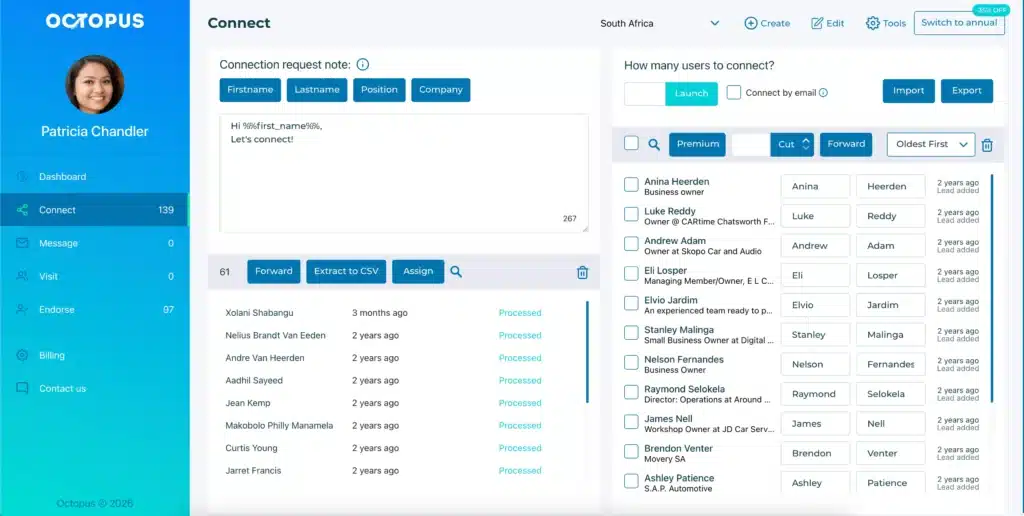
- Provide the right tools: Your team members need resources and tools to achieve their quotas. Equip them with the required tools and resources. For example, sales teams using Octopus CRM can effectively automate LinkedIn outreach and generate leads on the platform from a single dashboard;
- Continuous coaching: Regular coaching on deal strategy, objection handling, and pipeline management can help turn an average performer into a top seller;
- Review your progress daily: Keep track of your performance daily and use the right tools to track performance and tweak your strategy;
- Use a personal sales quota template: A simple sales quota template can help you track your progress against your daily and weekly goals. This could be a spreadsheet or a custom dashboard that shows your key metrics at a glance.
Meet Your Sales Quota and Exceed Your Team’s Sales Goals
You learned everything about sales quota, including its definition, how to set a quota, sales quota planning and strategy, and everything in between. Now, it’s time for you to put this knowledge into practice. Whether you’re a sales manager or a sales rep, this guide can help you set, track, and manage quotas and consistently achieve your goals.
Take inspiration from the sales quota examples, use the right quota-setting methods, and support your team with strategy and templates. This way, you can create an environment where everyone will be motivated to achieve their set quotas.