
When it comes to cross selling vs upselling, every B2B sales professional needs to understand how these two strategies shape customer relationships and revenue growth. The line between these two sales techniques can feel thin, yet getting them right can help increase sales and create better experiences for customers.
We’ll break down cross-selling vs upselling so you can apply these strategies with confidence.
Cross-Selling vs Upselling Differences
Cross selling vs upselling definition and differences: Cross-selling happens when you offer an additional product or service related to what the buyer already purchased. Upselling happens when you encourage the buyer to purchase a more advanced, premium, or upgraded version of the same product or service.
The core difference between upselling vs cross selling lies in the direction of the sale. Are you expanding the deal horizontally, or are you moving it vertically? It’s a question of breadth versus depth.
Goal
The goal of cross-selling is to increase total order value by adding related or complementary items. Upselling aims to create a more complete solution for a customer with a more advanced version, a higher tier, or an upgrade of a product they are considering or already using.
Focus
When it comes to the focus of upsell and cross-sell, the latter expands the breadth of a sale, meaning you don’t change what a customer is already using but offer products that can work alongside the core product.
Upselling is focused on increasing the depth of a sale. It improves the quality of performance of a product that your customer is already using. In other terms, you’re moving a customer from a basic plan to a premium one, or from a standard package to an enterprise edition for a better experience.
Sales Approach
The cross-selling technique involves proposing to a customer to try additional, complementary solutions. In contrast, upselling requires a sales rep to offer premium or feature-rich versions of the same solution.
Customer Motivation
With cross-selling, customers benefit in the form of convenience, completeness, and resolution of associated problems. Upselling delivers better performance, higher efficiency, and superior outcomes for a customer using a premium version of the same product or solution.
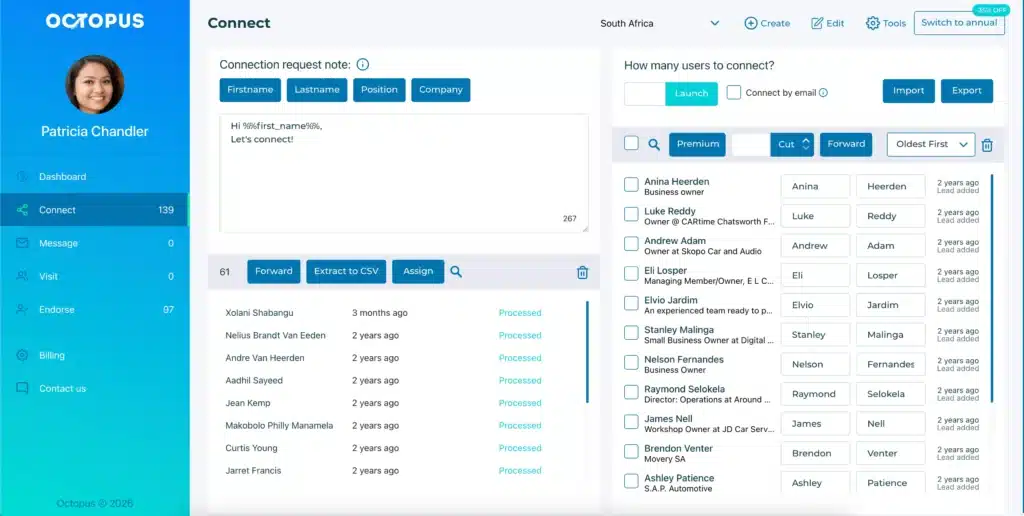
B2B sales teams using Octopus CRM find it easy to adopt both cross-selling and upselling because this LinkedIn automation tool helps them personalize interactions with customers and effectively dig into their needs and challenges.
What Is a Cross Selling?
Cross-selling is a sales method that involves selling a product or service related to or complementing an existing purchase by a customer.
A customer purchases your main product, and you convince them to buy a corresponding product or service because it could enhance customer experience or help create a complete solution. This is called cross-selling.
When using this approach, your goal is to solve related challenges or problems of a customer, and in doing so, increase sales and profits. In other words, you expand and strengthen your existing relationship with a customer with further value addition.
Cross-Selling Examples
Cross selling vs upselling examples can help you see the differences more closely and understand how these techniques work in actual business situations.
Take inspiration from the following cross-selling examples in the B2B context:
- Your main product is an inventory management system. A manufacturing company purchases your core product. You sell a related product called predictive maintenance software to the same customer because it can help them detect possible machine failures;
- A client signs up for your email marketing platform. You cross-sell your webinar hosting tool, allowing them to capture leads and then nurture them through the same ecosystem;
- A business buys your CRM. You also sell your customer support ticketing system to that customer since it can help create a unified record of every customer interaction.
As you can see in the examples above, in each case, the new product complements the original purchase. It solves a related problem of the client, delivering a well-rounded solution.
What Is Upselling?
Upselling is a sales strategy that involves persuading a new or existing customer to buy a higher-tier, more feature-rich version of a product or service that they’re using or considering to buy.
When you compare upsell and cross sell, the former increases the depth of a sale, whereas the latter expands its breadth. Upselling maximizes the value of a purchase for a customer by offering a better version of your main product.
This technique perfectly increases sales in situations where a customer is already using your core product. A sales rep’s goal is to guide them to take the next step and get better outcomes with a higher version of the same product or service.
Upselling Examples
Check out the following upselling examples that involve selling a high-end edition of an existing product or service.
- A client is using the “Starter” plan of your SaaS solution – Octopus CRM which comes with a limit of 10 users. As your client company grows, it needs to add more users to the SaaS product. You identify this need and convince them to upgrade to your “Business” plan, which offers unlimited users and advanced analytics;
- A company uses your basic cloud storage service. You upsell them to a tier that includes enhanced security protocols, automated backups, and dedicated compliance features;
- A client has a standard support package. You upgrade them to a premium support suite that includes a dedicated account manager and a guaranteed 1-hour response time for critical issues.
Upselling vs Cross Selling vs Suggestive Selling
Upselling vs cross selling and suggestive selling are three related but distinct sales techniques.
Upselling upgrades a customer to use a better version of the same product. Cross-selling promotes products related to the main purchase. Suggestive selling involves gently recommending items (whether related or not) that a customer hasn’t considered to buy.
What Is Suggestive Selling?
Suggestive selling is a sales technique where a sales rep recommends additional options, products, or services to existing customers. The idea is to sell extra products to customers that might be useful for them.
The product involved in suggestive selling is typically a low-cost and low-risk add-on that requires little deliberation on the part of the customer. The success of this sales technique depends on the obvious utility of the product and the timing of the sale.
Suggestive Selling Examples
Take a look at the following suggestive selling examples in B2B situations.
- A company buys your physical hardware, and you suggest including an extended warranty or a maintenance kit;
- A client purchases an annual subscription, and you recommend pre-buying a block of consulting hours at a discounted rate to be used for future customizations;
- After a customer buys your software, you ask them whether they would like to get a short, paid training session for faster adoption.
Conclusion
This cross selling vs upselling comparison has made it clear that both techniques are necessary for increasing sales and creating a better customer experience.
It is essential to understand your customers’ challenges, pain points, and business needs for the successful execution of these strategies. Once you’re aware of what your customer needs, you can adopt the cross-selling or upselling technique and increase revenue for your company.